Hiring & managing drivers
One vehicle earns; a fleet compounds. Drivers are how you get there — they run deliveries in parallel while your own vehicle works its jobs or you plan the next move. But drivers take a cut, and the size and shape of that cut is the difference between scaling and bleeding.
The hiring pool
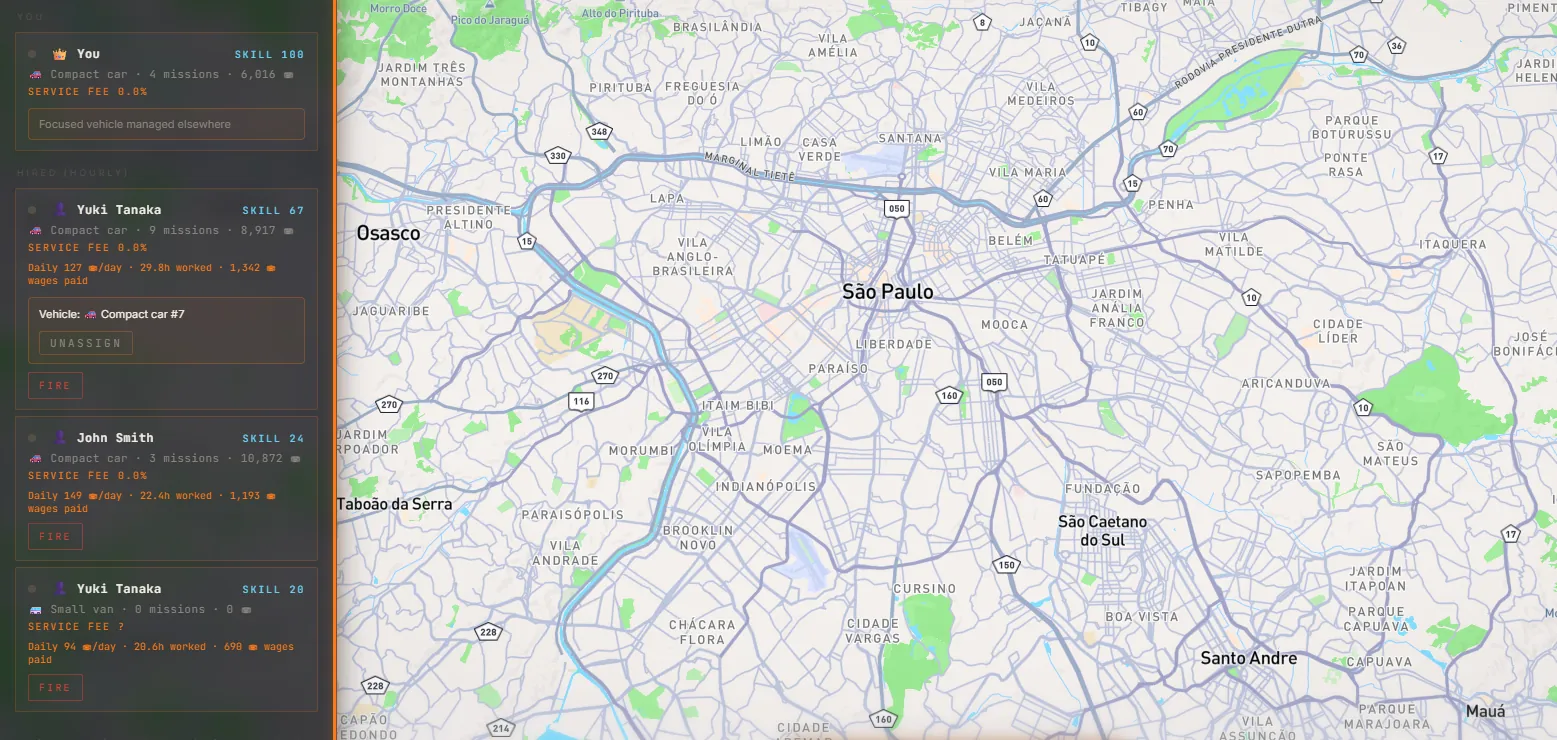
The Drivers tab shows a pool of five candidates, refreshed daily. Hiring itself costs nothing — drivers are paid from the work they do. Each candidate shows a skill rating (0–100) and their terms. Skill is not cosmetic: skilled drivers finish routes faster and have fewer accidents, less cargo damage, and fewer failures. Most of the pool sits in the 20–40 range, solid professionals in the 50s and 60s appear regularly, and drivers above 80 are rare finds worth grabbing when you see them.
Contract drivers: fast, available, expensive
A contract driver takes one job and leaves. No commitment — and the worst economics in the game:
- A large share of the payout up front, non-refundable — cancel the mission or fire them mid-run and it is gone;
- a completion fee when the job lands;
- a hidden personal cut — every contractor skims, and you only learn how deep after their first completed job;
- fuel billed well above what it actually cost.
After everything, only a modest slice of the contract price reaches you. And there is one more line in the fine print: contract drivers occasionally steal the cargo — a small risk that climbs for special cargo and for the biggest payouts. Never hand a contractor the event diamond.
So why use them at all? Because a slice of a contract you could not otherwise run is still profit, with zero commitment. Early on, before you can open a company, they are the only way to run two jobs at once — just feed them cheap, boring cargo and keep your expectations honest.
Hourly drivers: the real business
Once you open your company, you can hire staff drivers by the hour, and the hourly wage is essentially all they cost: no upfront cut, no completion fee, no fuel markup, no theft. The overwhelming majority of every payout stays with you — which is exactly why the mid game feels like a different game.
The catch is that wages accrue whether the driver is earning or idle, and payroll scales: each additional staff driver nudges everyone's effective rate up. Five idle staffers is a slow leak; five busy ones is a money machine. The management skill of the mid game is simply keeping the staff working.
Opening your company
The gateway to hourly drivers is the Open Company milestone: available after 20 completed missions, for a one-time fee. Next to your first van it looks like a lot of money, and plenty of players put it off. They should not. On any given contract an hourly driver costs a fraction of what a contractor takes, so if your second vehicle runs even a few jobs a day the fee pays itself back quickly — and every job after that is the dividend. The players who compound fastest are the ones who cross this line early.
Managing the operation
- Assign drivers from the Fleet panel — each vehicle card shows its driver, and the vehicle detail view lets you assign, replace, or unassign on the spot.
- One driver, one vehicle, one mission at a time. Parallelism comes from more pairs, not from overloading one.
- Match skill to stakes. Your highest-skill driver belongs in the biggest vehicle with the priciest cargo. Give rookies the compact and the parcel runs — their accidents are cheap there.
- Do not fire mid-mission. Firing a driver on the road fails their current job — the cargo, the payout, and any upfront fees all go with it.
- Watch the feed. Accidents, breakdowns, and completions stream into the notification center; a recap catches you up on anything that happened while you were away.